
reCAPTCHA is now Google Cloud Fraud Defense: what changed and what it means
Google renamed reCAPTCHA to Google Cloud Fraud Defense in April 2026 and now marks the old developer docs as deprecated. Your keys and prices have not changed. What has changed is what buyers expect: fraud defence across the whole customer journey, not a checkbox on one form.

6 min read
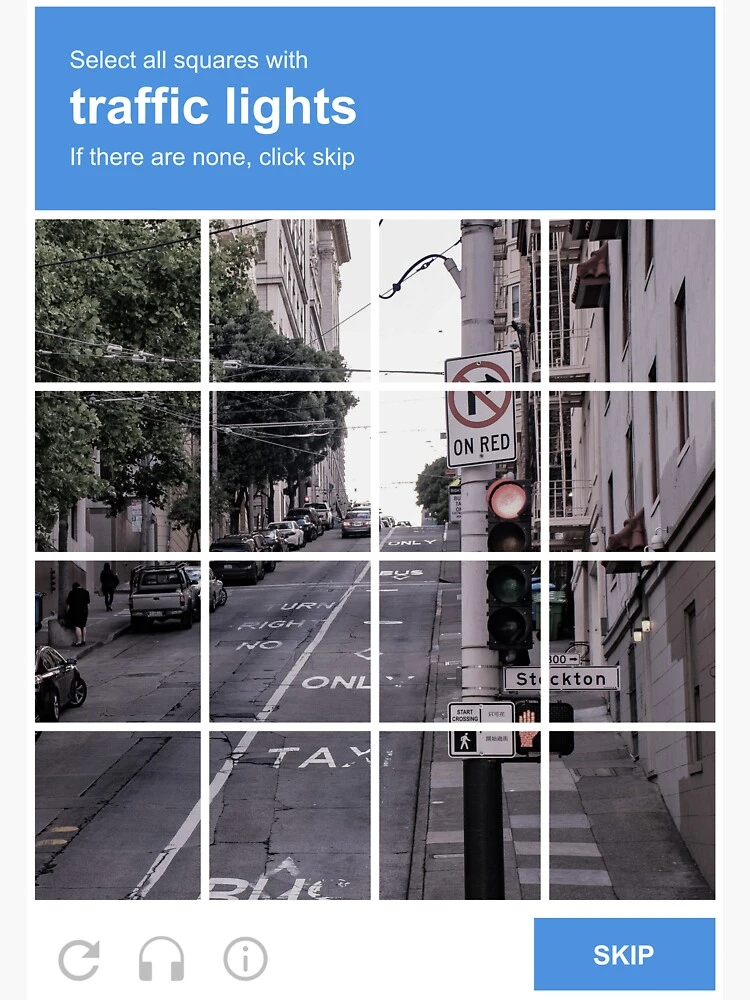
If you went looking for the reCAPTCHA documentation recently, you will have found this at the top of developers.google.com/recaptcha:
This page is deprecated. See the Google Cloud Fraud Defense documentation page for additional information.
reCAPTCHA has not been switched off. Google renamed it and moved the docs. The rename says something about where the market is going, though, and it is worth understanding before your next renewal.
What happened
At Google Cloud Next on 22 April 2026, Google announced Google Cloud Fraud Defense as "the next evolution of reCAPTCHA". The release notes record it the same day: reCAPTCHA is now part of Google Cloud Fraud Defense, and existing functionality is unchanged.
What stays the same, according to Google's FAQ:
- Existing reCAPTCHA customers are automatically Fraud Defense customers.
- No migration or action is needed.
- Site keys and integrations stay as they are.
- Prices do not change.
What Google added on top of reCAPTCHA:
- A dashboard of AI agent traffic, separating verified agents from suspected ones, using standards such as Web Bot Auth.
- A policy engine to allow or block users and agents by risk score, automation type and agent identity. It has been in Preview since 24 July 2026, along with Universal keys and challenge policies.
- A QR code challenge that Google calls "AI-resistant", meant to bring a person back into the loop when automation is suspected.
Separately, since 2 April 2026 the reCAPTCHA badge no longer links to Google's Privacy Policy and Terms of Use. Google now acts as a data processor and you as the data controller. We covered that change in reCAPTCHA switches to data processor.
Why Google changed the name
A captcha answers one question: is a person filling in this form? Most of the losses that businesses actually come to us about don't happen on one form. They happen across a series of visits by people and scripts that look fine one request at a time:
- one person running dozens of accounts to farm sign-up bonuses, free trials or referral rewards
- one login shared or resold to many people
- tickets bought in bulk and resold at a markup
- a banned user back the next day with a new account, a new device and a residential proxy
- stolen gift card or account details tested one at a time against a balance or login page
None of these needs to beat a captcha. A real person, or a solver service paid a fraction of a cent, can pass the challenge. You only catch them by linking sessions: the same device across many accounts, the same account across many devices, a banned identifier showing up again.
Google's rename admits this. Analysts have made the same move: Forrester's 2026 evaluation of this market is called Bot And Agent Trust Management, not bot management. Buyers now expect a product to follow a visitor from sign-up to checkout, including the AI agents acting for them.
What Fraud Defense still leaves to you
Fraud Defense gives you a score and, in Preview, a policy engine to act on it. A few things remain your job:
- Linking accounts. A score is about one interaction. Working out that forty accounts share one phone, or that a banned customer is back, means joining data across sessions yourself.
- Explaining a block. You get a score and reason codes, which depend on your tier. When a real customer is stopped, your support team has to work out why. Forrester criticised the product for "lack of detail and limited drill-down" on intent and explainability; see our reCAPTCHA Enterprise comparison.
- Google Cloud. Everything runs through a Google Cloud project and its billing.
Where Prosopo Protect fits
Prosopo Protect does bot detection and fraud detection together, on every request rather than on one form.
- Every request is checked. Protect runs at your edge on Cloudflare Workers or AWS Lambda@Edge (other integrations on request), and in your Android and iOS apps, and gives each request to your pages and API an allow, block or challenge verdict before it reaches your servers.
- Sessions are linked. Each session is tied to its device, its network and any identifiers you choose to send, such as an account ID, email or payment ID. Protect then finds shared and resold accounts, one device running many accounts, and banned accounts or payment IDs coming back on a new device or proxy.
- Identifiers are stored only as hashes. They are hashed with a salt you own before storage, and collection only starts once the data processing agreement for them has been generated in your portal. Because you own the salt, you can hash a value the same way on your side to look it up or add it to a ban list.
- Every block has a reason. Blocks name the detector that fired, such as Captcha solving service detected, with a request ID you can look up.
- You see it before it blocks. Every deployment starts with 14 days in preview mode, where everything is checked and nothing is blocked.
- Published prices. From $1,990 a month, priced by your number of sites and support needs rather than per request. See pricing.
If you already run your own fraud system
Many of the businesses we talk to have a fraud team and their own rules, often built around payments. Protect doesn't need to replace that, and it gives your fraud system more to work with. We set up the detections for each site with you, so you can leave out anything that overlaps with your own system. You decide which identifiers to send, and because the hashes use your salt, Protect's linked-account findings can be matched against your own records.
Protect's findings are available over an API. You can pull the verdict and the reason for any session, search past verdicts, and block a session from your own system. Every request Protect allows reaches your servers with an X-Prosopo-Request-Id header, so a checkout or a payment can be joined to the session behind it. That lets you combine what Protect saw (automation, a device shared across many accounts, a banned user back on a new proxy) with payment risk signals from Stripe Radar, Adyen RevenueProtect or your own payment provider, in one decision.
What to do now
If reCAPTCHA is working for you, nothing is forced. Keys keep working and the bill doesn't change. Remove the old Google privacy and terms links from your pages, as Google recommends.
If you are seeing fake accounts, shared logins, bulk buying or banned users coming back, the score on your form was never going to catch those. Book a 14-day preview of Protect and we will show you what it would have blocked on your own traffic.
On reCAPTCHA and dealing with fraud it can't see?
A Bot Exposure Assessment is a 30-minute call with an engineer. We look at your traffic, show where your current setup leaves gaps, and agree how a trial would be judged. Nothing to install first.
Questions
Something else? Ask an engineer.
Is reCAPTCHA being shut down?
No. Since 22 April 2026 reCAPTCHA has been part of Google Cloud Fraud Defense, and Google says it stays the bot defence part of that product. Existing site keys, integrations and prices are unchanged and no migration is needed. The page at developers.google.com/recaptcha is marked deprecated because the documentation moved to docs.cloud.google.com/recaptcha/docs under the Fraud Defense name.
What is Google Cloud Fraud Defense?
Google's new name for reCAPTCHA, announced at Google Cloud Next on 22 April 2026, with features added on top. Google describes it as a platform to check whether bots, humans and AI agents are legitimate across the whole customer journey, from sign-up and login to checkout. It adds a dashboard of AI agent traffic, a policy engine to allow or block users and agents by risk score, automation type and agent identity, and a QR code challenge meant to keep a human in the loop.
Is Google Cloud Fraud Defense generally available?
The rename and the existing reCAPTCHA features are live for every customer. Google's release notes list the Policy Engine, Universal keys and challenge policies as Preview from 24 July 2026, and an agent overview dashboard from 29 July 2026.
Do I need to change anything on my site?
Nothing is required. Google recommends removing references to its Privacy Policy and Terms of Use from your own pages, because since 2 April 2026 the reCAPTCHA badge no longer shows them. That change reflects Google acting as a data processor and you as the data controller.
What is the alternative to Google Cloud Fraud Defense?
Prosopo Protect. It checks every request to your pages, API and apps at the edge, links sessions to the device, network and identifiers you send (stored only as hashes salted with a salt you own), finds shared accounts and banned users coming back on new devices and proxies, and names the reason for every block. It runs on Cloudflare Workers or AWS Lambda@Edge (other integrations on request), so you do not need to be on Google Cloud, and it starts at $1,990 a month with 14 days in preview mode first.
Related reading
 Technical · How to deploy Procaptcha on your website or app How to switch from Google's reCAPTCHA to Prosopo Procaptcha and protect your website or app from bots for free.
 CAPTCHA · Google reCAPTCHA Price Hike: What Changed in 2024 & What It Broke Google's 2024 reCAPTCHA change cut the free tier from 1M to 10K requests/month. What actually changed, why it stung SMBs, and where teams moved next.
 CAPTCHA · Stop giving your website data away! Find out why reCAPTCHA, hCaptcha, and Cloudflare Turnstile may be secretly monetising your website data, and how Prosopo's Procaptcha is solving this problem.
 CAPTCHA · Why Am I Clicking Traffic Lights? The reCAPTCHA CAPTCHA Explained Traffic lights, cars and crosswalks in reCAPTCHA are not random — you've been labelling training data for Google's computer-vision models for a decade. Here's how the traffic-light CAPTCHA works, why it's still shown, and what a modern alternative looks like.
 Privacy · Google reCAPTCHA is a privacy nightmare - Questions over privacy promises and cookie use Scrutiny by the French data protection authority, CNIL, reveals the problematic infrastructure that allows for reCAPTCHA's operations
 CAPTCHA · Switching From reCAPTCHA to Prosopo: What's Involved What changes when you swap reCAPTCHA for Prosopo — integration surface, verdict shape, GDPR posture, and what your team sees in the dashboard.